
What is an AI employee? A plain-language explanation
By Vivek Moradiya, Founder, Darvix AIPublished
The plain-language definition
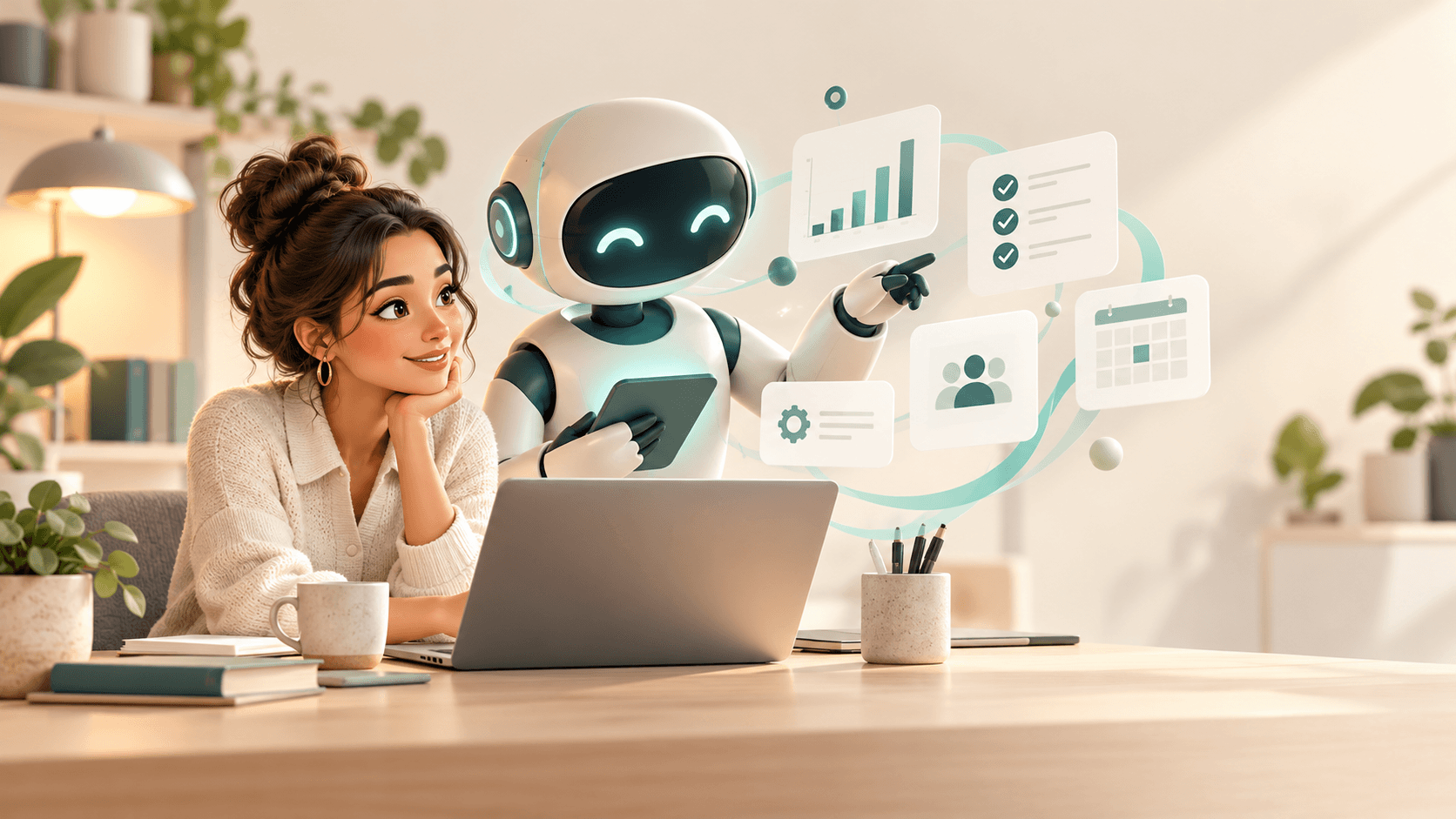
An AI employee is software that is given a job, not just a question. It's assigned a role, such as answering customer messages or keeping a website up to date, and it carries on doing that role's work over days and weeks. It knows the details of your business, it has access to the tools that role needs, and it acts when something happens: a customer messages, a post is due, stock runs low.
The word "employee" is a metaphor, and like any metaphor it only goes so far. An AI employee doesn't think about your business overnight or have opinions about your strategy. What it does have is a defined area of responsibility and the ability to get through the routine parts of it without being asked every time.
How it differs from a chatbot you prompt
With a general-purpose AI chat tool, you start each conversation, explain the context, ask for something, then copy the result somewhere else. It's useful, but you're still doing the job; the AI is helping with one step. An AI employee differs in three ways:
- It remembers your business. Your services, prices, hours, tone and policies are set up once and used every time.
- It can act, not just write. It can book an appointment, update a web page, schedule a post or change a price, because it's connected to the systems where that happens.
- It works without you starting it. A customer message at 10pm, or a weekly blog post, gets handled because that's the role, not because you opened a chat window.
A concrete example: Darvix AI's six employees
It's easier to see the idea in a real product. Darvix AI gives each business six AI employees, each with one area:
- Alex, chief of staff: takes a request in plain words and routes it to the right employee.
- Mark, website: builds and edits your website, writes and publishes blog posts on a schedule, and handles on-page SEO.
- Rae, store: looks after stock, pricing, coupons and orders in your online shop.
- Lex, social media: plans posts, makes images and videos and schedules them. Nothing posts until you approve it.
- Jenny, customer support: answers website chat, WhatsApp and Instagram using what you've taught her, can book, reschedule or cancel appointments inside a chat, and hands over to a person when needed.
- Nova, personal assistant: drafts Gmail replies and helps with your calendar and documents.
Notice that each one is defined by an area of work, not by a capability like "writing" or "images". That's the useful part of the idea: you know who's responsible for what. More on each on the chief of staff, website, store, social media, customer support and personal assistant pages.
What AI employees are good at
- Repetitive questions with known answers: prices, hours, location, what a service includes.
- Speed and availability: replying at any hour, so a late-night enquiry doesn't wait until morning.
- Routine, rules-based tasks: booking into free slots, updating a price, scheduling a post you've approved.
- First drafts: a blog post, a social caption, an email reply that you then check.
- Consistency: the same answer to the same question every time, as long as what they've been taught is correct.
What they're bad at
- Judgement calls with no clear rule, like whether to bend a policy for an upset regular.
- Situations they haven't been taught about. They can only be as accurate as the information you give them, and can get things wrong.
- Relationships. A long-standing customer may want you, not a fast reply.
- Anything physical, from fixing a leak to doing the actual service.
- Knowing what they don't know. They need clear limits and a way to hand over, rather than guessing.
Where a human stays in the loop
A sensible AI employee setup draws clear lines around what happens without you and what waits for you. Useful places for a human checkpoint:
- 1
Approval before anything goes public
Social posts are a good example. On Darvix AI, Lex prepares and schedules posts, but nothing is published until the owner approves it.
- 2
Hand-over when a conversation needs a person
Complaints, unusual requests and anything sensitive should move to you. Jenny hands conversations over rather than improvising.
- 3
Undo for changes
When an AI employee edits something, such as a web page, you should be able to see what changed and reverse it.
- 4
Regular review
Read a sample of conversations and outputs every week or two, and correct what they've been taught when answers drift.
Is an AI employee right for your business?
If a large part of your week goes on answering the same questions, moving information between apps, and keeping a website, shop or social feed ticking over, an AI employee can take much of that off you. If your work is mostly bespoke, relationship-heavy or physical, the gain is smaller, though the admin around it may still be worth handing over. If you're weighing this against hiring help, see AI employees vs virtual assistants.
The bottom line
An AI employee is software that owns a role's routine work, not a chat box you have to drive. Used well, it handles the repetitive, time-sensitive parts of running a business while you keep the decisions. Give it clear information, clear limits and a way to hand over, and check its work regularly.
Frequently asked questions
- What is an AI employee?
- Software assigned to a specific role, such as customer support or social media, that keeps doing that role's ongoing work using your business's details and connected tools, rather than waiting for you to prompt it each time.
- Is an AI employee the same as a chatbot?
- No. A chatbot answers what you ask in a single conversation. An AI employee remembers your business, can take actions like booking or publishing, and works when events happen, such as a customer messaging.
- Can an AI employee make mistakes?
- Yes. It's only as accurate as what it has been taught, and it can get things wrong. That's why approvals, hand-overs, undo and regular review matter.
- Will an AI employee post or publish without my approval?
- It depends on the product and the task. On Darvix AI, social posts prepared by Lex are not published until you approve them.
- What AI employees does Darvix AI include?
- Six: Alex (chief of staff), Mark (website), Rae (store), Lex (social media), Jenny (customer support) and Nova (personal assistant).